


Well, this is awkward. This paragraph (and the one after it) likely won’t give you the solutions you’re longing for. The reason being is that according to Harvard professor, Ronald Heifetz, there are two types of challenges we face:
Technical Challenges & Adaptive Challenges
Technical challenges are known problems with known solutions. While you might not have the answer to a technical challenge (like having a broken neck or needing a way to transfer money internationally or not knowing the population of Berlin), there is an expert who does have the answer.
This is an issue of information.
Technical challenges are serious, important, and deserve to be solved. All we’re saying is that not all of your problems are technical. In the modern age (which we often call the Information Age) there’s no shortage of data, expertise, and access to the world’s best information.
Yet, our challenges persist.
Adaptive challenges, on the other hand, are more tricky. Sometimes the problem itself is difficult to define, but the essence of an adaptive challenge is that in order to solve adaptive challenges the person, place, or thing with the challenge would need to evolve to become a new person, place, or thing.
What podcast or book or expert advice will solve for a co-workers’ resistance to authority? What expert can you hire to tell a perfectionist that they are not their work and that exploring challenging work that can’t be perfect doesn’t mean they are bad or inferior after a childhood of learning exactly that?
This is an issue of transformation.
People and organizations are in desperate need of adaptive problem solving. This gives birth to the opportunity of adaptive leadership coined by Heifetz.
If you think about your leadership as a container. Technical challenges would require extension expertise to be brought into your container. Adaptive challenges require your container to grow in size.
How do we drive adaptive change?
It’s simple, but not easy. Our capacity to expand our capacity and hold new perspectives comes from disconfirming information and transcendent experiences. Adaptive leadership, then, is largely an undertaking of building and protecting a container that would support people going to the edges of their experience.
Most groups require two important ingredients to do developmental work:
Trust & Willingness
With trust and willingness, individuals and groups can support edge work and the negative, informative feedback that would drive adaptive change. After all, it’s at the edges of our capacity that we experience failure and that’s exactly where we need to go with our work, our leadership capacity, and our relationships.
When we expose people to the kinds of feedback and experiences that would develop their capacity, we have a chance for adaptation.
While positive, reaffirming experiences feel good and inform us that we are on the same track, they won’t change us. If change is what you and your organization are after, you’ll need to celebrate negative feedback and challenging environments that grow capacity.
Much of the Leadership Laboratory experience is rooted in the biased view that adaptive leadership is the most critical need for leaders today. Another Harvard professor, Robert Kegan, would say that leaders are “in over their heads” and as long as the challenges of the day are of greater complexity than our leaders’ capacity to hold them we need adaptive leadership. Furthermore, we need to build organizational cultures that put development at the forefront of their way of being.
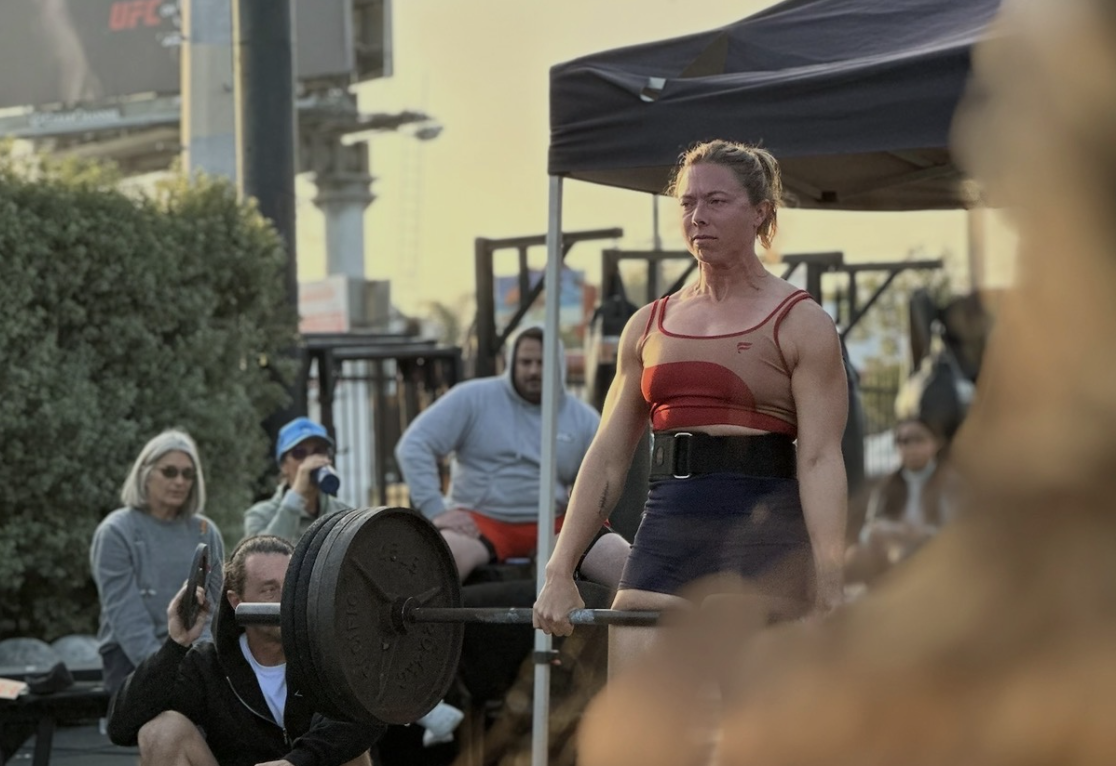
My fellow gym people understand physiological adaptation perfectly and the metaphor is too strong not to share. Ask a coach what technique would get a 400 pound deadlifter to make a 600 pound lift. Is it a flat back? Do they need to stay in their heels? Use a different grip?
Or, do they need to become a different person?
Google, ChatGPT, any number of consultants, and this sentence won’t do the adaptation for you. Change is something that falls in the lap of those needing to change. Adaptation cannot be outsourced.
4/28/26 WOD
DEUCE Athletics GPP
Complete 5 rounds of the following:
6 RDL’s
2 Rounds
6 Single Leg Step-downs(each)
Corner Fat Grip Carries
EMOM 10
Minute 1: 6 Pull-ups
Minute 2: 10 HR Push-ups
DEUCE Garage GPP
Build to a 20RM Back Squat..
Then, complete 3 rounds for quality of:
15 Tempo Seated DB Sumo Deadlifts (50X1)
150′ Sled Drag
Then, complete 5 rounds for time of:
:45 Max Alt 1-Arm DB Clean and Jerks (70/50)
-Rest 1:15-