


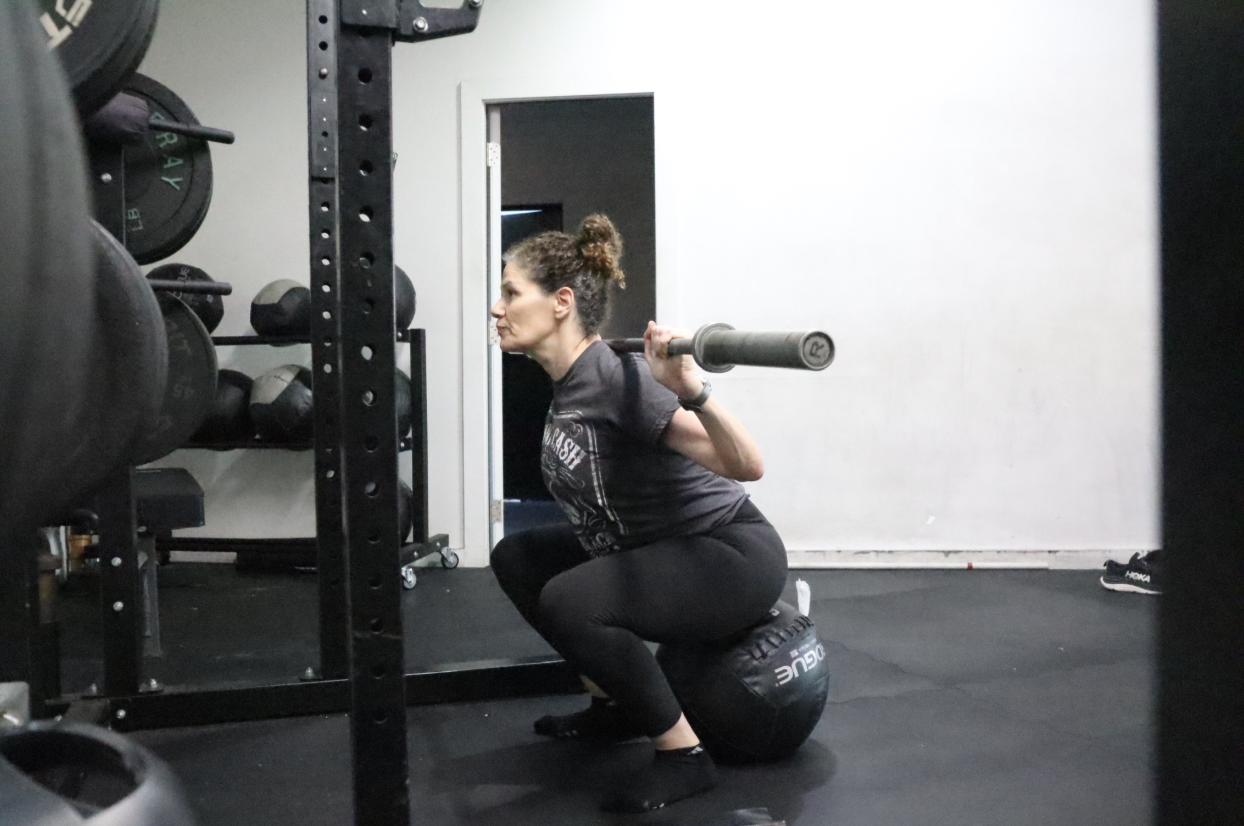
Your whole life improves when you develop a more robust back squat. It’s that simple. If you can build a stronger, more stable full range of motion back squat, it’s incomprehensible what else will improve as a result.
The back squat is king.
Here’s a short list of one thousand metrics, health benefits, and life improvements:
- Relative strength
- Absolute strength
- Force production
- Rate of force development
- Explosive power
- Vertical jump
- Broad jump
- Sprint acceleration
- Change of direction ability
- Deceleration ability
- Ground reaction force production
- Triple extension mechanics
- Athleticism
- Work capacity
- Muscular endurance
- Training tolerance
- Recovery capacity
- Lifting confidence
- Barbell skill
- Movement economy
- Stronger glutes
- Stronger adductors
- Stronger quadriceps
- Stronger hamstrings
- Stronger calves
- Stronger spinal erectors
- Stronger trunk
- Stronger upper back
- Improved bracing
- Better force transfer
- Better bilateral coordination
- Better unilateral stability
- Improved balance
- Improved proprioception
- Better posture under load
- Increased bone-loading tolerance
- Improved gait power
- Improved stair-climbing performance
- Improved hiking ability
- Improved carrying capacity
- Better sport performance
- Greater reserve strength
- Reduced perceived effort in daily life
- Improved power-to-weight ratio
- Increased lean mass
- Better movement efficiency
- Better athletic confidence
- Improved durability
- Better sprint mechanics
- Improved jump landing mechanics
- Better contact sport resilience
- Improved agility
- Increased speed reserve
- Improved acceleration
- Improved deceleration
- Greater physical preparedness
- Better resilience under fatigue
- Higher movement competency
- Improved motor control
- Better kinesthetic awareness
- More coordinated hip extension
- Better hip drive
- Better pelvic control
- Better trunk stiffness
- Better anti-flexion strength
- Better anti-rotation strength
- Improved lifting IQ
- Greater tolerance to training volume
- Higher force absorption capacity
- Better performance longevity
- Reduced performance anxiety
- Ankle dorsiflexion
- Hip flexion
- Hip internal rotation
- Hip external rotation
- Pelvic control
- Thoracic mobility
- Squat depth
- Balance
- Stability
- Coordination
Additional improvements:
- Better walking mechanics
- Better running mechanics
- Better stair descent
- Better stair ascent
- Easier floor transitions
- Easier sitting
- Easier standing
- Easier kneeling
- Easier getting off the ground
- Easier tying shoes
- Easier gardening
- Easier lifting children
- Easier housework
- Better joint centration
- Better foot function
- Better arch control
- Better knee tracking
- Better femoral control
- Better pelvic alignment
- Better weight distribution
- Improved movement confidence
- Better symmetry
- Reduced movement hesitation
- Better body awareness
- Increased movement options
- Better range utilization
- Better end-range strength
- Better motor learning
- Better tissue adaptability
- Better coordination under fatigue
- Lower body fat percentage
- Increased lean body mass
- Increased resting metabolic rate
- Improved insulin sensitivity
- Lower fasting insulin
- Better glucose disposal
- Lower post-meal glucose spikes
- Improved glycogen storage
- Better nutrient partitioning
- Increased mitochondrial density
- Increased mitochondrial efficiency
- Better metabolic flexibility
- Improved VO₂ support capacity
- Better carbohydrate tolerance
- Better caloric expenditure
- Better blood sugar stability
- Improved energy availability
- Reduced visceral fat
- Reduced waist circumference
- Improved waist-to-height ratio
- Better appetite regulation
And commonly associated changes:
- Lower fasting glucose
- Lower HbA1c
- Better triglycerides
- Higher HDL
- Lower LDL particle count
- Better inflammatory markers
- Improved leptin sensitivity
- Improved satiety
- Better recovery from meals
- More stable energy throughout the day
Hormonal improvements include:
- Testosterone (especially in previously sedentary individuals)
- Growth hormone response
- IGF-1 response
- Insulin sensitivity
- Cortisol regulation
- Catecholamine efficiency
- Sleep hormone rhythms
- Circadian rhythm stability
Associated markers often improve:
- Resting heart rate
- Heart rate recovery
- Blood pressure
- Blood glucose
- HbA1c
- Triglycerides
- HDL
- hs-CRP
- IL-6
- TNF-alpha
- Resting metabolic rate
- Recovery speed
- Exercise tolerance
Improvements also include:
- Bone mineral density
- Femoral neck density
- Hip density
- Lumbar spine density
- Fracture resistance
- Tendon stiffness
- Tendon resilience
- Ligament integrity
- Cartilage nourishment
- Joint tolerance
- Joint stability
- Connective tissue strength
- Load tolerance
- Impact tolerance
- Fall resistance
And lower risk of:
- Hip fracture
- Osteopenia
- Osteoporosis
- Sarcopenia
- Frailty
- Disability later in life
Improvements in:
- Healthspan
- Functional age
- Biological age markers
- Independence
- Mobility reserve
- Walking speed
- Chair-rise ability
- Fall prevention
- Fracture prevention
- Daily living capability
- Reduced all-cause mortality risk
- Reduced frailty risk
- Reduced nursing-home risk
- Improved quality-adjusted life years
- Improved independence in old age
- Better cognitive aging
- Greater resilience to illness
- Faster recovery after hospitalization
- Motor cortex adaptation
- Neural efficiency
- Motor unit recruitment
- Intermuscular coordination
- Concentration
- Executive function
- Reaction time
- Learning capacity
- Body awareness
- Spatial awareness
- Better focus
- Improved confidence
- Better stress tolerance
- Increased resilience
- Improved discipline
- Improved emotional regulation
- Self-efficacy
- Confidence
- Agency
- Discipline
- Consistency
- Goal-setting ability
- Self-respect
- Self-image
- Resilience
- Stress management
Additional improvements:
- Reduced anxiety
- Reduced depression symptoms
- Greater optimism
- Improved mood
- Improved social confidence
- Better posture
- Greater willingness to try difficult things
- Increased persistence
- Improved identity as a capable person
- Better relationship with discomfort
Improved ability to:
- Pick up children
- Carry groceries
- Move furniture
- Load luggage
- Climb stairs
- Get off the toilet
- Sit on the floor
- Rise from the floor
- Play with grandchildren
- Hike
And:
- Less fatigue from daily tasks
- Better travel tolerance
- Better work capacity
- Better recreational participation
- Better recreational sports performance
- More confidence in physical environments
- Greater independence
If you are going to do anything in the gym, there might not be a better use of your time than building a respectable back squat. Everything improves when you get strong!

7/2/26 WOD
DEUCE Athletics GPP
Complete 4 rounds of the following:
15 Bent Over Landmine Rows
Complete 3 rounds for quality of:
12 Lateral Roller Push-ups (total)
KB Corners Farmers Carry
:20 Weighted Side Plank Hold (each)
EMOM 9
Minute 1: 6 Back Squats
MInute 2: 10/ 8 Cals
Minute 3: :30 Max KB Swings
DEUCE Garage GPP
6-6-6-6
Floor Press
Then, complete 3 rounds for quality of:
8 2-Ct Med Ball Russian Twist Tosses – Left
8 2-Ct Med Ball Russian Twist Tosses – Right
15 DB Biceps Curls + 100′ Iso Carry
Then, AMRAP 15
400m Run
20 Knees-to-Elbows
12 Hang Power Cleans (115/75)